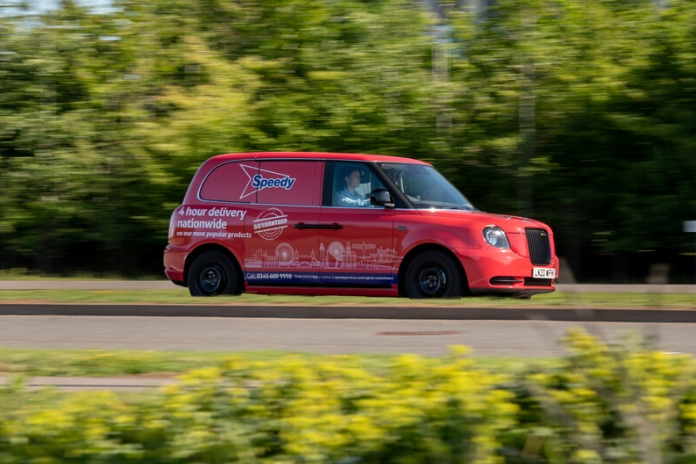
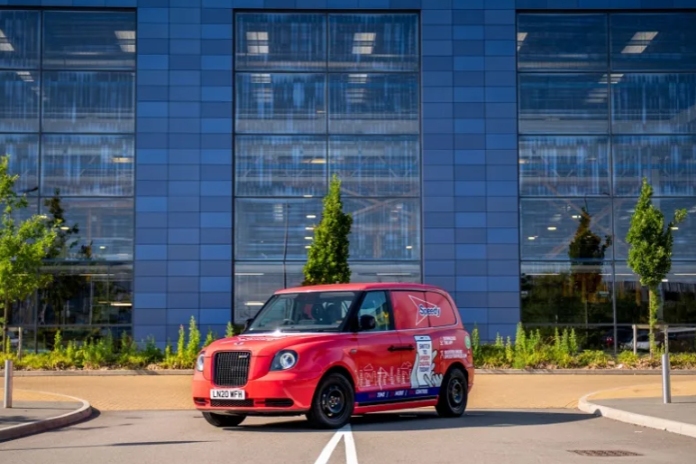
Tool and plant hire business Speedy is trialling a prototype electric taxi that has been converted into a van, ahead of the launch of a fully electric commercial van later this year.
The trial with the London Electric Vehicle Company (LEVC) sees
Speedy using a prototype of the TX electric taxi with a full interior van conversion.
The TX is similar to LECV’s VN5 van, which will be unveiled in the fourth
quarter of this year.
The VN5 is based on the same architecture as LEVC’s TX
electric taxi and gives a pure EV range of 61 miles (93 km) and a total
flexible range of over 300 miles (484 km). The VN5 is equipped with a turning
circle of just 10.1m for mobility in busy city environments.
This is not a paywall. Registration allows us to enhance your experience across Construction Management and ensure we deliver you quality editorial content.
Registering also means you can manage your own CPDs, comments, newsletter sign-ups and privacy settings.
VN5’s cargo capacity accommodates two Euro sized pallets
with a gross payload of over 800kg. It has been built with a large side-loading
door (enabling a pallet to be side-loaded) and a 60/40 split door at the rear
to make loading and unloading easy for the driver.
Joerg Hofmann, LEVC CEO, said: “We are pleased to be joining
forces with Speedy, adding another high-profile name to our growing roster of
VN5 trial partners. Its business is based on delivering tools and equipment to
construction and infrastructure sites, often in and around large cities: the
kind of working day our new flexible, zero-emission capable one-tonne van was
built for. We are looking forward to developing our relationship with Speedy
over the coming months.”
Aaron Powell, Head of Fleet at Speedy, said: “The
construction sector accounts for 10% of the UK’s carbon emissions and we
recognise that the hire industry is uniquely placed to introduce innovative,
sustainable solutions that can reduce this. This new electric van will set a
new standard for small electric commercial vehicles, LEVC’s powertrain
technology has already saved 36,000 tonnes of CO2 from entering the atmosphere
through its use in the taxi and shuttle market.”