









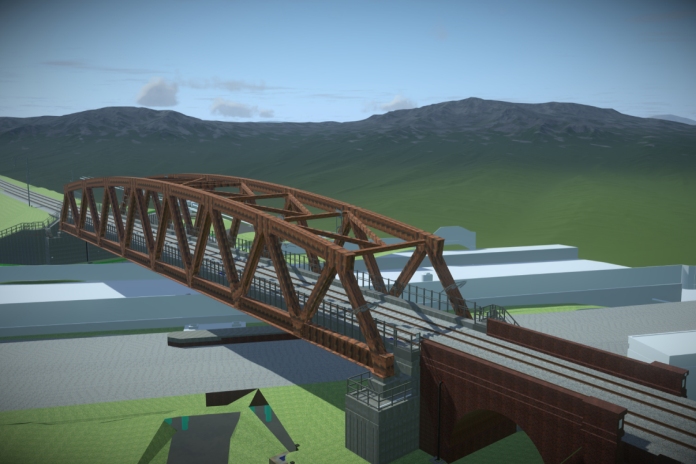
Skanska UK will use offsite manufacturing to minimise the steel tonnage of a new £52m single span bridge for HS2 in the west Midlands, as well as replacing most of the cement in the concrete with recycled material, in a bid to cut the project’s carbon footprint.
The new bridge for Network Rail will replace the SAS13 bridge on the Stechford to Aston rail line, paving the way for the new HS2 route.
The existing bridge comprising eight masonry arches and a central steelwork span will be demolished and replaced with a single 92m span steel structure.
Skanska will use ground granulated blast furnace slag (a waste material from steelwork manufacturing that will replace most of the cement in the concrete) on the bridge, which will be the largest single span railway bridge in the West Midlands.
The £52m contract to build the structure is in addition to development services work that Skanska delivered during the detailed design and enabling works for the project, valued at £14m.
The bridge will pave the way for the new HS2 line approach into Birmingham city centre and the planned HS2 Midlands Maintenance Depot.
Jonathan Willcock, managing director of Skanska’s infrastructure business, said: “We’ve worked really hard over the past two years with Network Rail to ensure that passengers are at the heart of our solution, which will optimise rail services during construction while bringing carbon and cost savings.”
Neil Gaskin, head of capital delivery (Central) at Network Rail added: “Both teams have worked tirelessly to achieve this first key milestone, I am personally looking forward to working with Skanska to deliver this strategically important project. This structure is a key element of the Water Orton Corridor programme of works, which is critical to HS2 overarching strategy.”
The project is due for completion in September 2022.