Further education students from colleges across the UK have completed two scaled infrastructure projects at Constructionarium.
The 38 students are part of a pilot programme designed to give young people hands-on experience of construction and engineering careers.

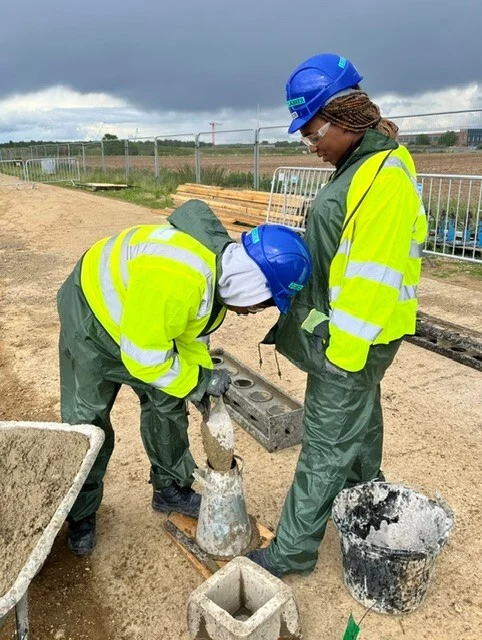
The five-day initiative, delivered in partnership with the Built Environment Schools Trust (BEST), brought together learners aged 16-18 from eight colleges to work on live construction-style projects under the guidance of industry professionals.
Students were tasked with delivering two major schemes: BrunelLine, a 90m railway installation; and AngliaZero, a 7m-high floating offshore wind turbine connected to a residential property, designed to demonstrate renewable energy and sustainable infrastructure principles.
Working in teams, participants applied knowledge gained in the classroom while experiencing the realities of site-based project delivery. The programme concluded with presentations and demonstrations in which students showcased the technical, leadership and teamwork skills developed during the week.
The pilot forms part of wider efforts by industry and education providers to address long-term skills shortages in construction and the built environment.
Constructionarium’s training model aims to replicate the full lifecycle of a construction project, from planning and design through to construction, testing and handover. Alongside technical skills, the programme focuses on developing employability and interpersonal skills.

Value of practical learning
Julia Stevens, chief executive of Constructionarium, said the initiative demonstrated the value of practical learning in attracting new entrants to the sector.
“At a time when the industry is facing significant skills and recruitment challenges, we have a responsibility to provide young people with meaningful opportunities to experience construction first-hand,” she said.
“This programme demonstrates how practical, industry-led learning can complement classroom education and help learners build the confidence, technical capability and employability skills needed to succeed in the sector.”
Terry Watts, chief executive of the Built Environment Schools Trust, added: “The success of this pilot programme highlights the value of giving students direct exposure to the built environment through authentic, hands-on experiences.
“Working on projects that mirror real industry challenges gives students a deeper appreciation of the opportunities available within the sector and the skills required to succeed.”
Industry placements
The programme forms part of the Built Environment Schools Trust’s wider work to connect learners, education providers and employers, creating clearer pathways into construction careers.
The initiative also supports the growing requirement for industry placements within further education. Many construction-related courses now require learners to complete 315 hours of industry placement as part of their studies.
With skills shortages continuing to affect the construction sector, both organisations say closer collaboration between industry and education will be essential to developing future talent.
Constructionarium, a not-for-profit organisation, provides experiential learning programmes to help learners gain practical experience and a better understanding of construction careers. Through partnerships with industry and education providers, it aims to equip young people with the technical knowledge, confidence and workplace skills needed to progress into employment across the built environment sector.
The organisations involved hope the success of the pilot will help demonstrate how project-based learning can support recruitment into construction and infrastructure professions, while providing students with valuable industry experience before entering the workforce.