











The Digital Collaboration of the Year category, sponsored by Bluebeam, at the Digital Construction Awards 2026 features nine supply chain-wide teams working together.
This category recognises the best use of digitalisation/digital methodologies and/or technologies to enhance collaboration between two or more organisations on a project, at any level of the supply chain.
The category was exceedingly popular and attracted many strong entries. Here are the nine that made the shortlist.
AtkinsRéalis/Buckinghamshire Council/Balfour Beatty Living Places | Buckinghamshire Highways Alliance Master Programme
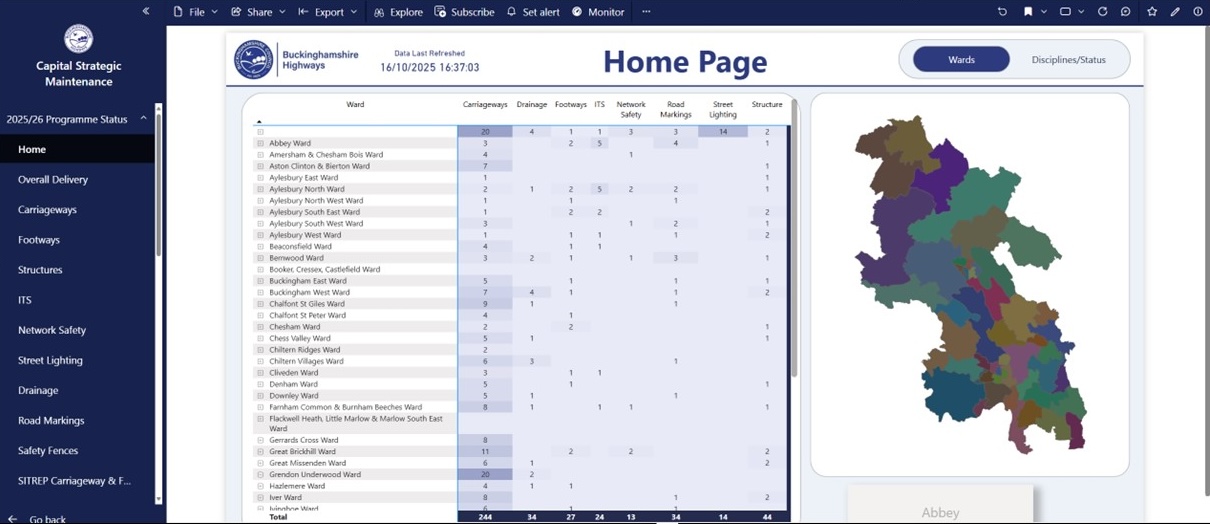

The Buckinghamshire Highways Alliance – comprising AtkinsRéalis, Buckinghamshire Council, Balfour Beatty Living Places (BBLP) and framework contractors – delivers more than 400 capital schemes annually. However, because it involves multiple project managers across different IT systems, the alliance lacked a unified digital programming platform, resulting in various challenges such as fragmented communication, limited visibility and inconsistent reporting.
To overcome these challenges, the alliance implemented a digital programme methodology to streamline collaboration, improve transparency and reduce administrative effort. The primary goal was to provide real-time visibility and automate fortnightly reporting.
Commissioned by Buckinghamshire Council and led by AtkinsRéalis, the delivery team included a project manager and two data specialists from AtkinsRéalis, three council officers and one programme manager from BBLP. Together, they worked to meet the needs of all three organisations through stronger integration and more effective outcomes.
The team took a thoughtful, collaborative approach to developing the digital strategy. They ran workshops with stakeholders to understand issues, mapped processes to identify inefficiencies, explored digital tools like dashboards, SharePoint lists and automation, and tested a pilot programme.
The result was a contract-wide digital programme dashboard providing all stakeholders with access to the same real-time data. A central tracker on SharePoint automated updates from live Microsoft programmes and validated data against predefined rules, resulting in an accurate programme dashboard. Reporting became faster and more accurate, improving collaboration and freeing up project managers’ time by reducing duplication and highlighting errors.
Canary Wharf Group/Kadans/Kohn Pedersen Fox Associates/Revizto/Buro Happold/Ramboll | One North Quay
One North Quay’s sheer scale and ambition as Europe’s tallest and most technically advanced commercial laboratory building demanded a rigorous and committed approach to managing information and design coordination across a 23-storey vertical science campus.
The complexity of the building’s systems and scale meant that traditional, document-based workflows were insufficient.
Canary Wharf Group (CWG) and Kadans Science Partners partnered with architect Kohn Pedersen Fox Associates and engineering consultancies Ramboll and Buro Happold to implement CWG’s newly established digital strategy, developed through a research-driven approach that prioritised integration, collaboration and evidence-based decision-making.
A structured R&D programme evaluated seven digital tools against project-specific criteria, testing three on live projects to determine which best supported cross-disciplinary coordination. Revizto was ultimately selected for 3D model coordination and issue tracking, integrating effectively with existing platforms such as Asite (the project’s CDE) and Revit.
The result was a step-change in how CWG delivers major developments with its collaborative partners. Revizto enabled a level of collaboration, transparency and real-time coordination that was previously unattainable, setting a new corporate standard for digital delivery.
The success of this model has since informed CWG’s wider digital roadmap, establishing a scalable and repeatable framework for future projects across Canary Wharf.
Digital Realty/RLB Digital | CDE Solution for EMEA Projects
Global data centre operator Digital Realty (DLR) identified that its existing CDE was not supporting effective collaboration and project delivery.
The legacy CDE suffered from inconsistent usage across projects, extensive duplication of documentation and limited control over document access. These issues increased risk, reduced confidence in data integrity and hampered the speed of design, engineering and construction activities.
To overcome this challenge, DLR appointed RLB Digital as its digital partner. Together, they defined requirements for a new, ISO 19650‑compliant CDE that would be intuitive for internal and external users, scalable across regions and fully integrated with DLR’s existing tech stack.
RLB Digital built the solution primarily on SharePoint, supplemented by Power Apps for project set‑up, access requests and task information delivery plan creation. Metadata‑driven SharePoint lists replaced static folder navigation, providing dynamic views based on user roles. Automated document numbering aligned with 19650‑2, and external supplier access was automated to remove manual IT intervention.
The design was iteratively reviewed by a core stakeholder group – including design, engineering, construction and the delivery partner Mercury – before any build began.
This has resulted in the elimination of duplicated files, reducing storage requirements and environmental impact; audit‑related information retrieval time has fallen by more than 90%; project set‑up time has decreased from days to under 15 minutes; and real‑time visibility of document versions has increased user confidence that they are accessing the correct file.
Additionally, the new CDE solution generated an estimated financial ROI of more than £1m per year by avoiding additional software licences and lowering administrative needs.
Glider Technology/MoJ/Kier/Future Decisions | HMP Millsike: a data-driven digital twin for next-generation prison management
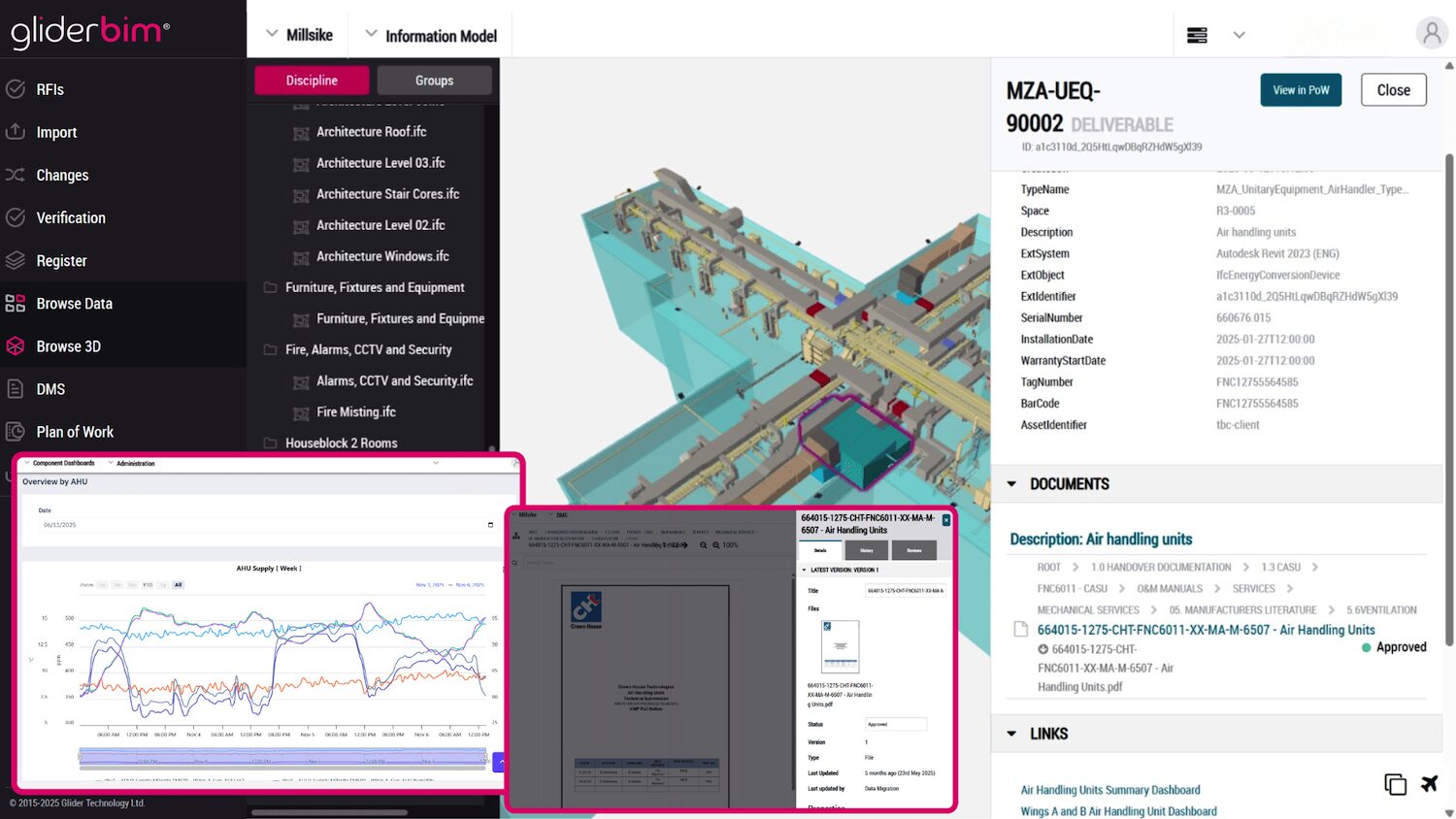
The Ministry of Justice (MoJ) faced the challenge of transitioning from reactive to predictive FM across its new-build prison estate, starting with HMP Millsike. This required a digital solution to enhance collaboration between the MoJ, its construction/FM provider (Kier), the asset information manager (Glider Technology) and the data analytics specialist (Future Decisions).
The core problem was that critical operational and asset data, vital for long-term efficiency, sustainability and comfort, was siloed and underused. The digital strategy focused on creating a repeatable, scalable digital twin model for MoJ oversight and smart FM integration, using the new T60 Houseblock at HMP Millsike as the proving ground.
The implementation required a significant hardware upgrade of the building management systems network and cabling in the T60 houseblock. The team’s biggest unforeseen challenge was maintaining security and continuity of a live, highly secure prison site during hardware installation. This was overcome through precise planning by Kier and collaboration with the MoJ operations team to minimise disruption.
Another key element was the collaborative effort to harvest live data from an unrelated electricity monitoring project into the digital twin database, immediately enriching the data set and proving the benefit of centralised collaboration. This smooth integration proved the model’s future potential.
The digital twin project successfully met the initial challenge of unifying disparate systems and delivered clear, measurable outcomes that drastically improved collaborative decision-making and project performance.
iDEA/King’s College London | Vantage for King’s College London
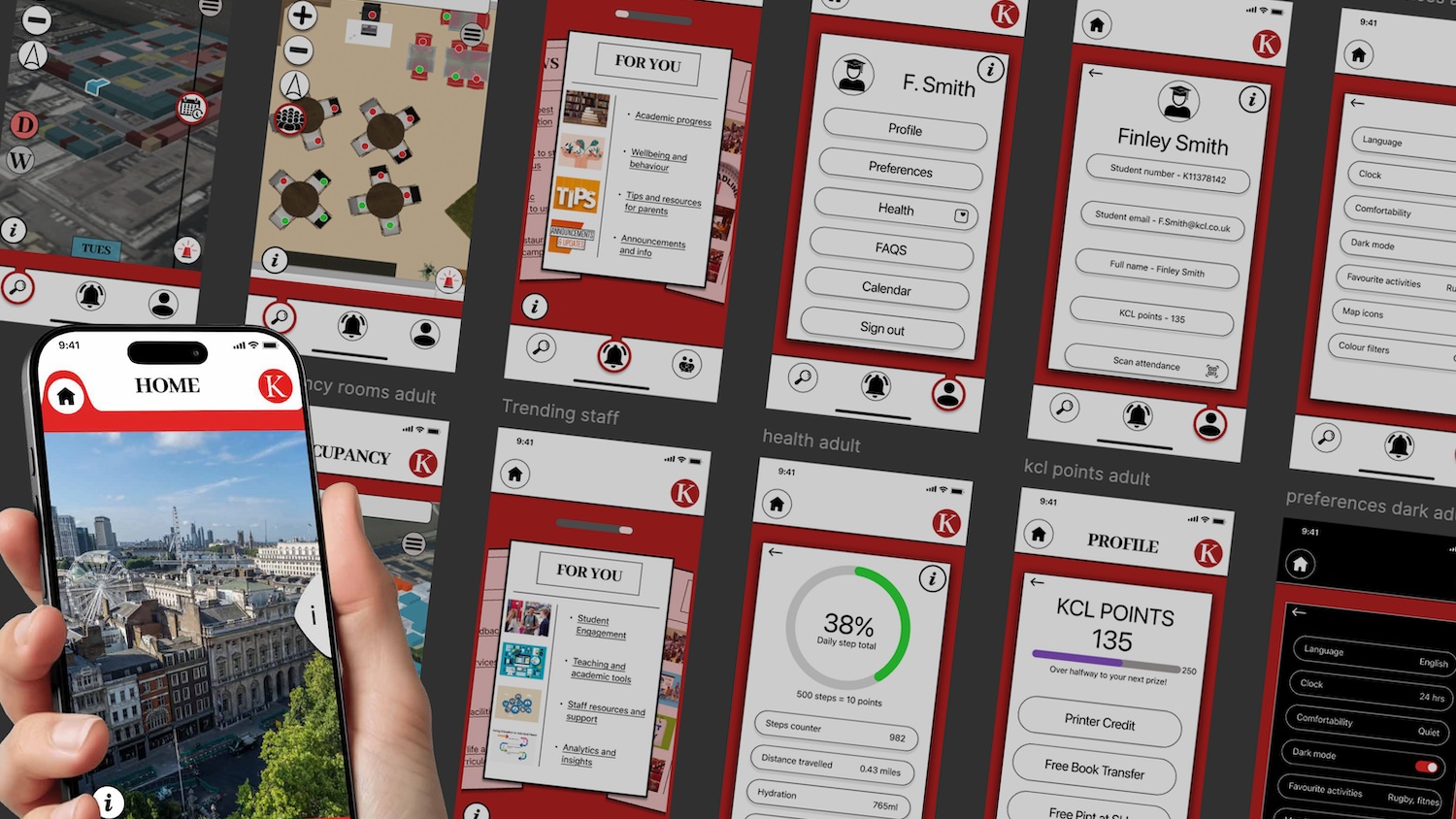
King’s College London’s (KCL) estate comprises more than 250 buildings across diverse contexts and periods. To realise its 2029 property vision of optimising historic assets, right‑sizing office space, enriching student experience and delivering cutting‑edge teaching environments, KCL appointed iDEA to audit accommodation, validate estate data and lay the groundwork for a new masterplan.
Although KCL possessed solid Planon‑based property data, it captured only area allocations and ownership categories. Stakeholders lacked confidence in how spaces were actually used, by whom and when. This data gap hindered scenario planning, prevented evidence‑based decision‑making and risked misaligned investments amid post‑covid shifts in student behaviour and uncertain demand.
iDEA and KCL co-developed a bespoke digital ecosystem, the Vantage platform, which integrates disparate datasets into a single, visual digital twin. Extensive stakeholder workshops ensured the platform reflected the needs of students, academics, facilities staff and sustainability leads.
Among the benefits delivered by the Vantage ecosystem’s transparent and data-driven decision framework are increased confidence in estate data, exposing hidden utilisation patterns and informing phased redevelopment; acceleration of planning cycles through instant scenario modelling and carbon impact forecasts; and reduction of risks of overbuilding or underutilisation, supporting KCL’s ambition to right‑size space while preserving historic assets.
Vantage has also enhanced student and staff experience via intuitive navigation, real‑time space availability and inclusive accessibility tools.
Majenta Solutions/George Leslie | From objection to acceptance: harnessing the power of 4D and digital collaboration
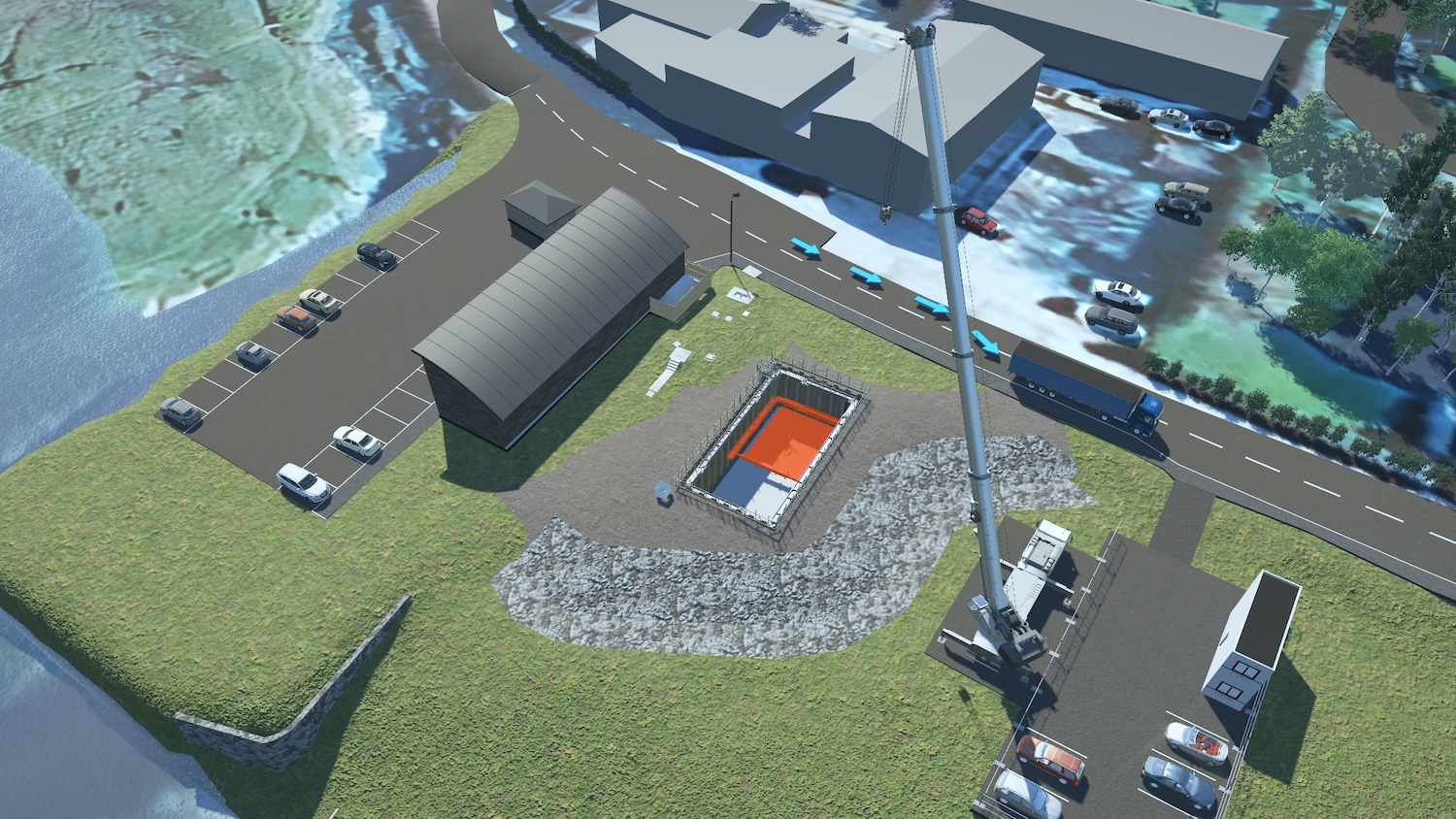
George Leslie was appointed by Scottish Water as the main contractor to deliver a significant upgrade of the sewer and drainage network of Glencaple, a village in south-west Scotland.
The project, which required land acquisition and planning permission, encountered objections stemming from a misunderstanding of the proposed development due to a lack of non-technical drawings and visualisations, and limited early-stage public engagement.
Traditional methods, such as engineer-led presentations and 2D drawings, failed to bridge the knowledge gap between technical teams and non-technical stakeholders, particularly the older demographic comprising much of the community, resulting in the Scottish Water planning application being rejected.
This is when George Leslie partnered with Majenta Solutions to transform the consultation process: one that could effectively unite the client, contractor, designer, regulatory bodies and community around a shared understanding.
Together, they developed detailed 3D and 4D models that fundamentally transformed how project partners collaborated and communicated. Key digital products used included Revit for 3D modelling, Synchro 4D to integrate the schedule and produce a 4D model, and Viewpoint for Projects for collaboration and document management.
Implementation occurred across multiple channels. For public consultations in the town hall, the 4D model played on loop on a television screen, which attendees immediately gravitated toward over traditional notice boards and posters. The presentation could be paused at various points, allowing George Leslie’s site team to explain specific aspects, answer questions in real-time, and receive immediate feedback
The availability of detailed visualisations for the first public consultation is estimated to have avoided a substantial programme extension and associated costs. By proactively addressing concerns and eliminating the need for further consultations before Scottish Water’s planning application resubmission, the digital approach recovered critical time.
Given that the project had already suffered five to six months of delay from the initial failed consultation, this represented a significant reduction in the extended pre-construction period. George Leslie’s own estimates put the total time saved thanks to Majenta’s involvement at as much as three months, equating to roughly 15% of total pre-construction time and reducing costs by approximately £17,000.
Morgan Sindall Construction/Norfolk and Norwich University Hospitals NHS Foundation Trust/Gamma AR | Improving collaboration and engagement using AR
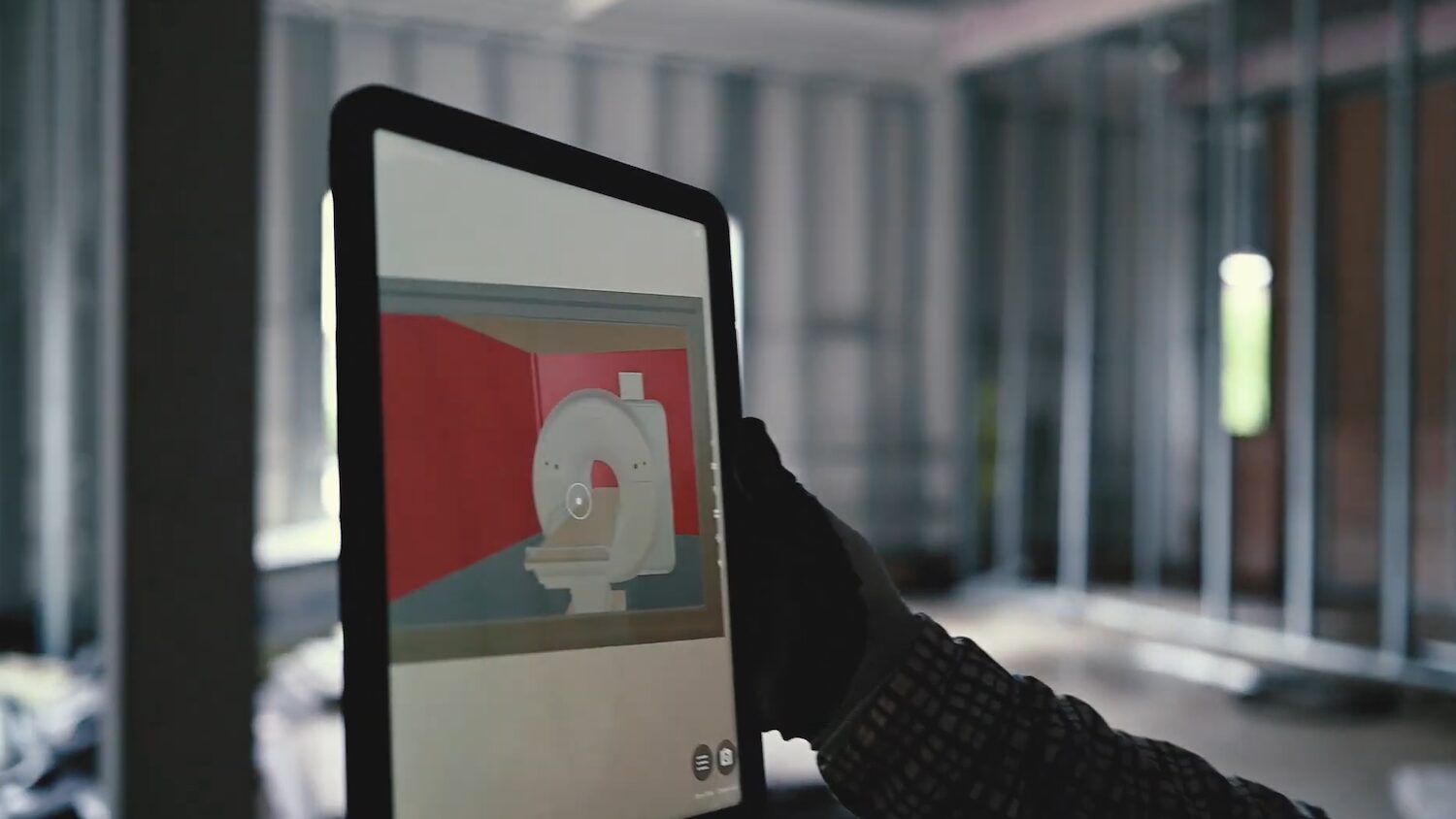
Morgan Sindall Construction worked with Norfolk and Norwich University Hospitals NHS Foundation Trust to transform how the latter, a large and non-technical client, could visualise a complex new hospital.
Traditional 2D drawings left the client with limited appreciation of the finished spaces, creating a risk that the new spaces would not meet operational expectations. The trust’s extensive team, many of whom were not involved from concept-to-contract award, struggled to understand designs.
Although Autodesk Construction Cloud (ACC) BIM Collaborate was already in use, the trust wasn’t fully engaged in the process. The viewer is not life-size, and its use was predominantly for coordination and development of the design.
Morgan Sindall evaluated eight augmented‑reality (AR) platforms and chose Gamma AR as the preferred tool because of its seamless ACC integration, no file‑size limits and ease of use.
Morgan Sindall deployed a ‘train the trainer’ rollout: a Gamma AR specialist trained a pilot crew, who then trained the trust team using their own iPads equipped with LiDAR. On site, the client could walk through the facility and see what was going to be delivered through AR. Issues identified on the iPad were pushed back to ACC, enabling rapid design corrections.
The AR experience turned static progress reports into immersive site walks, dramatically improving stakeholder comprehension and engagement. Radiology staff, the hospital’s arts manager and operational staff all used the technology to visualise their future workspaces, reducing the risk of post‑completion issues.
Persimmon Homes/Construction Skills Certification Scheme | Competent workforce = safer sites
Persimmon has more than 270 developments across Great Britain with thousands of subcontractors and more than 10,000 staff working on them every day. Site management teams face the challenge of ensuring that every person on site holds a valid competency card.
The existing workflow required managers to manually photograph, photocopy and file each worker’s card in disparate checking platforms. Fragmented data meant expired, revoked, or fraudulent cards could slip through, while the repetitive process was time-consuming and didn’t offer real‑time assurance of competence.
In early 2025, Persimmon extended its Persimmon Way App – already used by 90,000 registered users for QR‑code site sign‑ins – to integrate the newly released CSCS Smart Check API.
Working closely with the CSCS, Persimmon gained direct, live access to competency data across all 37 CSCS Alliance schemes. When a worker scans the site‑office QR code, the app instantly queries the API, validates the card’s status and grants access only if the card is current and authentic. Managers intervene only when the API returns an invalid response, eliminating manual checks and photocopying.
The automated system has already flagged expired, revoked and fake cards, reporting the latter to CSCS fraud investigators. Site managers now save considerable time to focus on more valuable tasks, while workers can benefit from universal and digital verification: once inducted, they don’t need to repeat checks across sites. The unified data view gives senior leadership a reliable, company‑wide snapshot of workforce competence, contributing to fewer site accidents, higher productivity and better construction quality.
United Utilities Enterprise/IAND | Transforming supplier ecosystem management
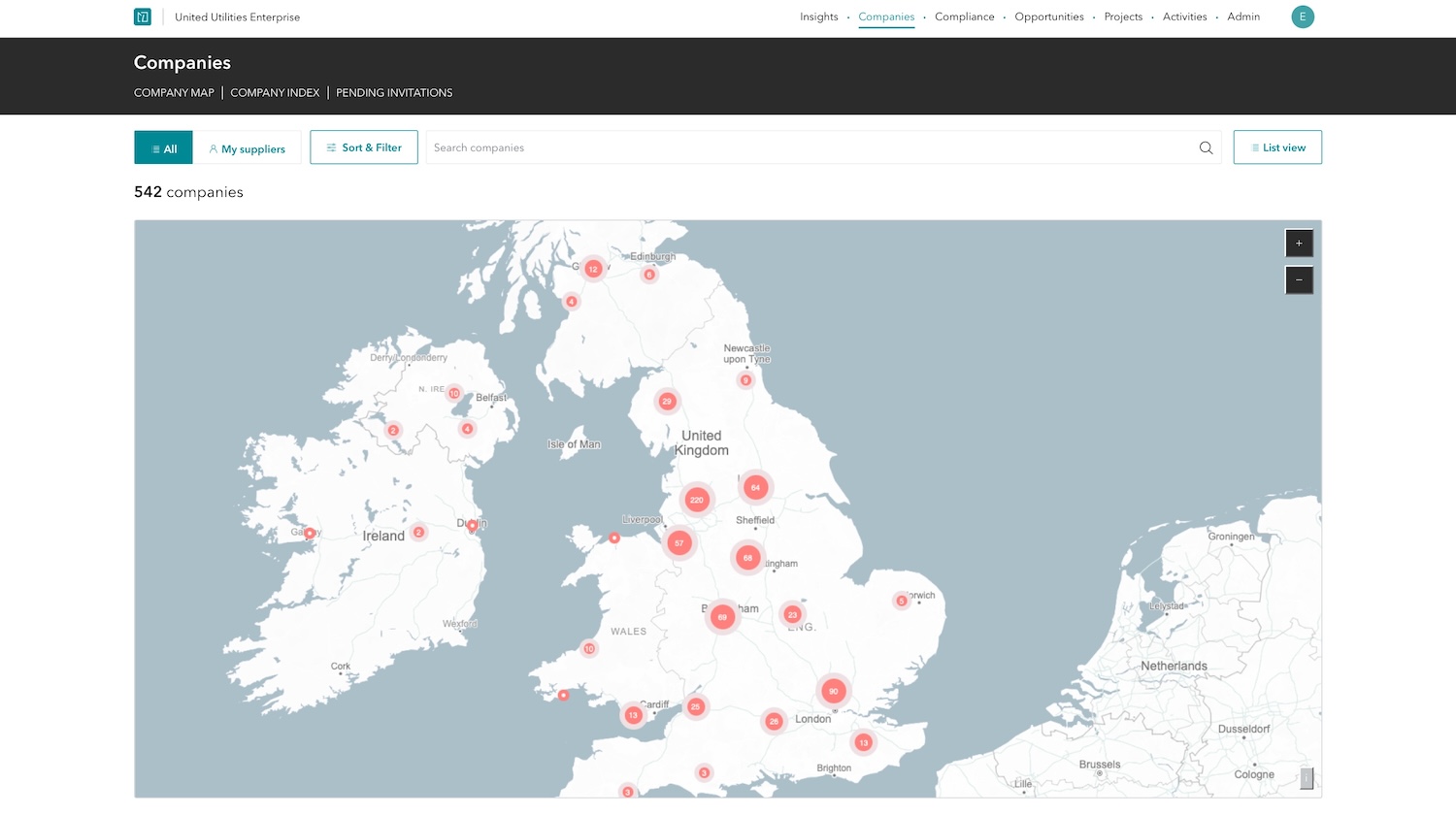
United Utilities Enterprise (UUE) is delivering the £3bn segment of United Utilities’ £13.7bn AMP 8 programme in the north-west of England. To manage the scale of the project, UUE brought together eight delivery partners and more than 300 suppliers into a single digital ecosystem powered by the IAND platform.
Before that, each delivery partner operated its own procurement and ERP system, resulting in fragmented supplier data, duplicated onboarding processes and limited visibility of capacity, risk and spend across the alliance. The lack of a common source of truth hindered coordinated decision-making, increased administrative effort and slowed the mobilisation of suppliers, especially SMEs in the region.
UUE selected IAND as its digital partner and co‑created a configurable web app that supports the full supplier‑relationship‑management lifecycle. Key actions included:
- integrating data connectors to pull supplier information from each partner’s ERP and applying de‑duplication tools to create a single supplier record;
- automating the onboarding workflow – from registration through insurance verification and ESG data capture – so that registration now takes minutes rather than days;
- deploying modular procurement, performance feedback and compliance modules that can be activated in line with programme stages; and
- providing a shared dashboard where all eight partners can view supplier approval status, spend, risk scores and performance metrics in real-time.
The platform was launched in January 2025. Within four weeks, the supply chain was onboarded, and within 30 days, more than 300 suppliers were added. Thanks to the IAND platform, 90% of onboarding and compliance tasks are now automated, saving a three-person team roughly 90 days of effort in the first six months. Additionally, duplicated documentation has been eliminated, and real-time visibility of spend and supplier performance has enabled proactive risk management and aligned decision-making across all partners.
Celebrate with the best
The winner will be revealed at the gala dinner at the London Marriott Grosvenor Square on 18 March. You can join the shortlisted entrants by booking your seats at the awards. There is an early bird discount for those who book tables by close of play 23 January.
The Digital Construction Awards are organised by Digital Construction Week, the Chartered Institute of Building, CM and Digital Construction Plus. Bluebeam, nima and Sage are among the sponsors.
To find out more about the awards, head to digitalconstructionawards.co.uk.
To become an awards sponsor, email Karolina Orecchini.