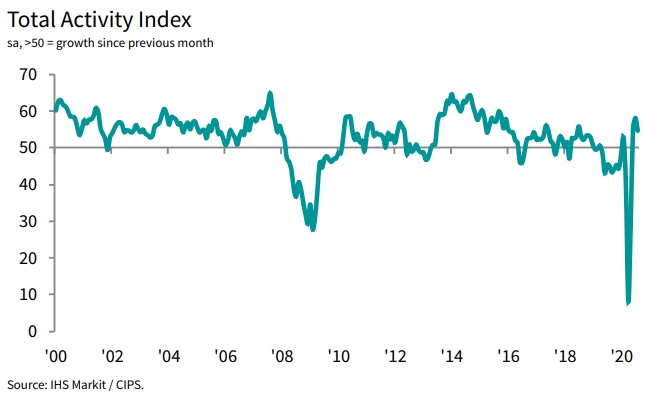
Construction buyers have reported a fall in the rate at which construction is bouncing back from the coronavirus pandemic during August.
The IHS Markit / CIPS UK Construction PMI survey found that
a lack of new work to replace completed contracts has dampened the speed of
recovery in the sector.
The index registered a score of 54.6 in August (where any
figure above 50 indicates growth in total construction output), down from 58.1
in July.
This is not a paywall. Registration allows us to enhance your experience across Construction Management and ensure we deliver you quality editorial content.
Registering also means you can manage your own CPDs, comments, newsletter sign-ups and privacy settings.
While still in growth, the rate of expansion in August was at
its weakest level for three months.
House building continued its strong return to growth, recording
a score of 60.7 in August. Commercial work stood at 52.5, while civil
engineering activity was weaker at 46.6.
Total new business volumes increased for the third month running during August, but the rate of expansion remained only “modest” and slowed since July.
Clients adopt 'wait-and-see' approach
Construction companies reported a “wait-and-see” approach among clients, which has limited their opportunities to secure new work, the survey found. However, several respondents noted the strength of their firms’ order books.
Meanwhile, purchasing costs rose, with the overall rate of
input price inflation in August at its highest since April 2019.
And despite subdued new orders, more than twice as many
survey respondents (43%) said they expected a rise in construction output over
the next 12 months as those that anticipate a fall (19%). This was often linked
to hopes of a boost from major infrastructure projects and resilient public
sector construction spending. However, an expected rise in business activity
could not prevent a further drop in staffing numbers.
Tim Moore, economics director at IHS Markit, which compiles
the survey, said: “The latest PMI data signalled a setback for the UK
construction sector as the speed of recovery lost momentum for the first time
since the reopening phase began in May. House building remained the best-performing
area of construction activity, with strong growth helping to offset some of the
weakness seen in commercial work and civil engineering activity. The main
reason for the slowdown in total construction output growth was a reduced
degree of catch-up on delayed projects and subsequent shortages of new work to
replace completed contracts in August.
“Another month of widespread job shedding highlighted the
ongoing difficulties faced by UK construction companies, with order books often
depleted due to a slump in demand from sectors of the economy that have experienced
the greatest impact from the pandemic.
“More positively for the employment outlook, business
expectations climbed to a six-month high in August as construction firms turned
their hopes towards a boost from major infrastructure work and reorienting
their sales focus on new areas of growth in the coming 12 months."