











A fire door that tests itself, an enterprise asset management system for the MoD, a digital twin for education estate management and a simple but effective means of reducing university energy consumption have all made the shortlist for the Asset Management Best Practice category at the Digital Construction Awards 2026.
This award recognises the use of digital processes and technology in asset management. Criteria used by the judges included improved operational efficiency of the asset, more sustainable operation, improved maintenance regimes, steps towards compliance with the golden thread, and the speed and ease with which information can be accessed.
Here are the four entries that made the shortlist.
Auro Door | Harmony Fire
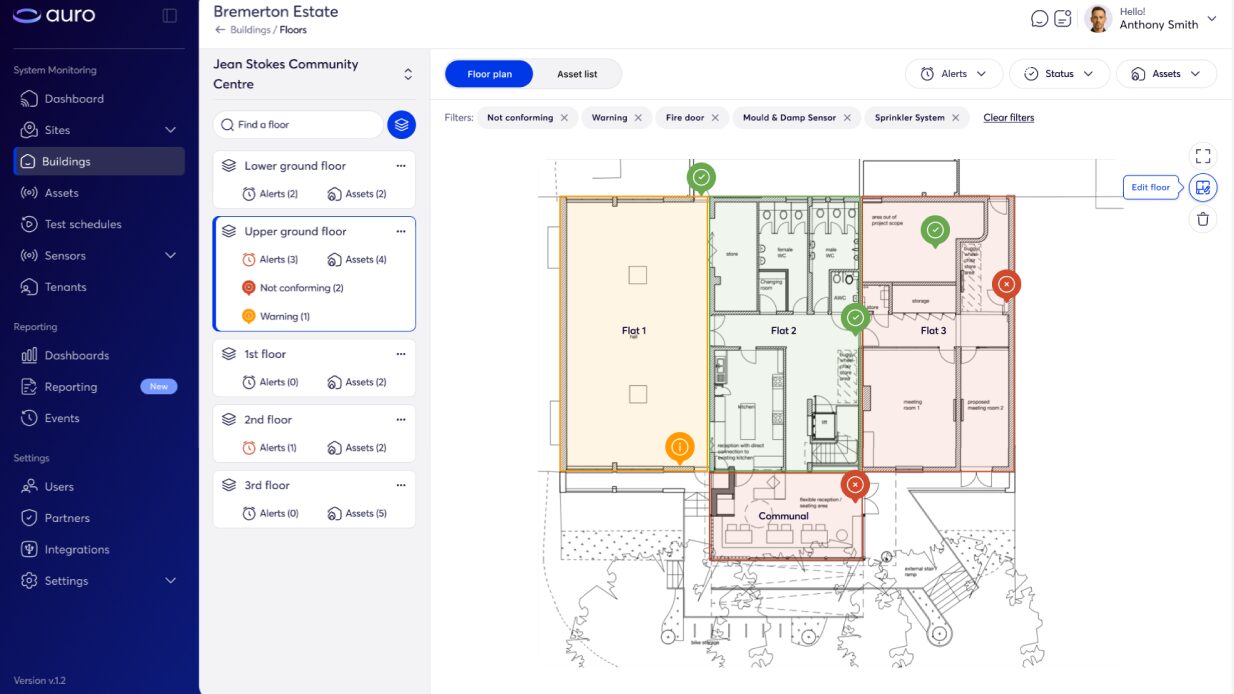

Fire safety engineering consultancy Harmony Fire developed a fully integrated, IoT-enabled and certified fire door system that provides real-time, 24/7 compliance monitoring. The “world first” Auro Door, launched in June 2025, was created in response to the multiple challenges of compliance, effective asset management and golden thread requirements in the social housing sector.
Harmony Fire developed Auro Door in-house over three years at a cost of approximately £4m. It is both a product and a secure technology platform that provides landlords with real-time compliance of fire doors across their asset portfolios through a customisable dashboard.
Following installation, Auro Door’s sensor technology automatically detects if it has been installed correctly and to the exact gap tolerances required. The fire door will not be signed off and handed over to the customer until it has been through this self-validation process.
The data is logged in, creating a golden thread of information that is then continuously updated as the door is in use. This eliminates the potential for new fire doors to be installed incorrectly and signed off en masse due to the digital audit trail and automated self-checking from activation. An open API technology platform allows easy integration with customer asset management software.
The success of the Auro Door trials and backing from the trial partners is driving Harmony Fire’s engagement with the regulator and government on reforming Regulation 10 to recognise the impact of 24/7 fire door monitoring technology on life-safety assurance, while making the case that landlords benefit from cost and resource efficiencies via automated monitoring.
Digital enterprise asset management of the MoD Estate | MACS and Defence Infrastructure Organisation
Spanning more than 900 sites and 96,000 buildings, the Ministry of Defence’s (MoD) estate has one of Europe’s largest and most complex asset portfolios, critical to operational readiness and national security.
The MoD faced the challenge of implementing a digitally enabled, enterprise-wide asset management (EAM) solution to standardise data for 2.37 million assets, deliver real-time analytics and uphold the golden thread of information, bringing estate data back into defence ownership and creating a level playing field for suppliers.
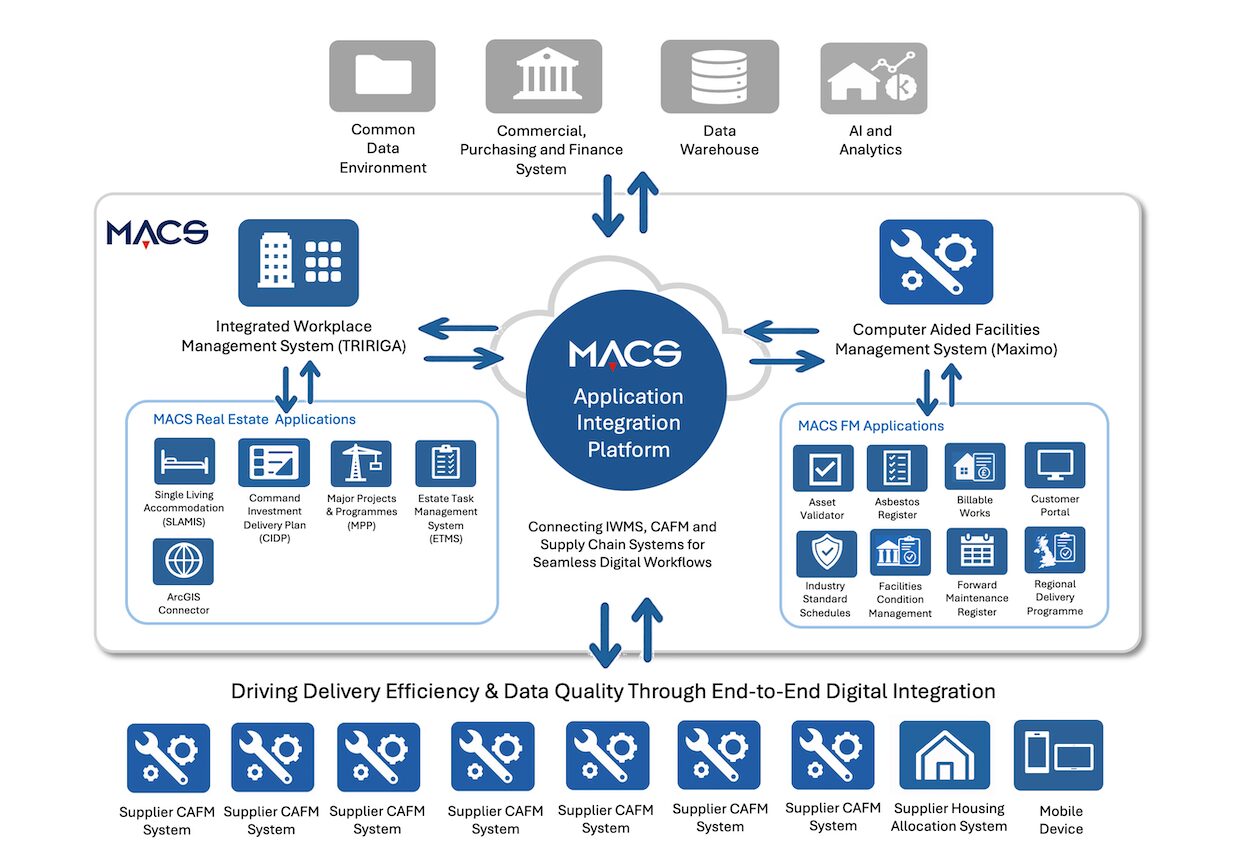
To address these challenges, the Defence Infrastructure Organisation (DIO) partnered with systems integration consultancy MACS to implement a digitally enabled, integrated EAM solution.
At the heart of this transformation was the creation of a federated data architecture, integrating the workplace management system (IBM Tririga) and authority-owned CAFM (IBM Maximo) systems. This architecture established a single source of truth for all estate-related data, enabling real-time aggregation and analysis.
Between 1 January and 31 October 2025, the implementation of the digital EAM solution delivered transformative outcomes across the strategic, operational and compliance dimensions, including: governance and commercial control; an enterprise asset register; a digital integration platform; CAFM containerisation; golden thread compliance; data repatriation and standardisation; and security.
The digital EAM of the defence estate project exemplifies asset management best practice through the strategic use of digital technology, robust governance and a commitment to sustainability and compliance. This holistic approach has transformed the MoD’s asset management capability, embedding digital processes at every level and ensuring a resilient, compliant and sustainable estate.
Digital twins for education estate management | ONE Creative Environments/Plymouth CAST
Plymouth CAST multi-academy trust manages a dispersed estate of 35 schools across Devon and Cornwall, many of which face the challenges common to older educational buildings, such as ageing infrastructure, escalating energy costs, dispersed data and inconsistent compliance management.
The trust also faced operational inefficiencies and was under pressure to meet net-zero targets, align with the Department for Education’s emerging Estate Management Level 4 standards, and deliver more efficient, transparent and accountable estate management – all within constrained budgets and limited internal technical capacity.
The core challenge lay in connecting fragmented asset data, processes and systems into a single, coherent framework that could support both day-to-day FM and strategic estate planning.
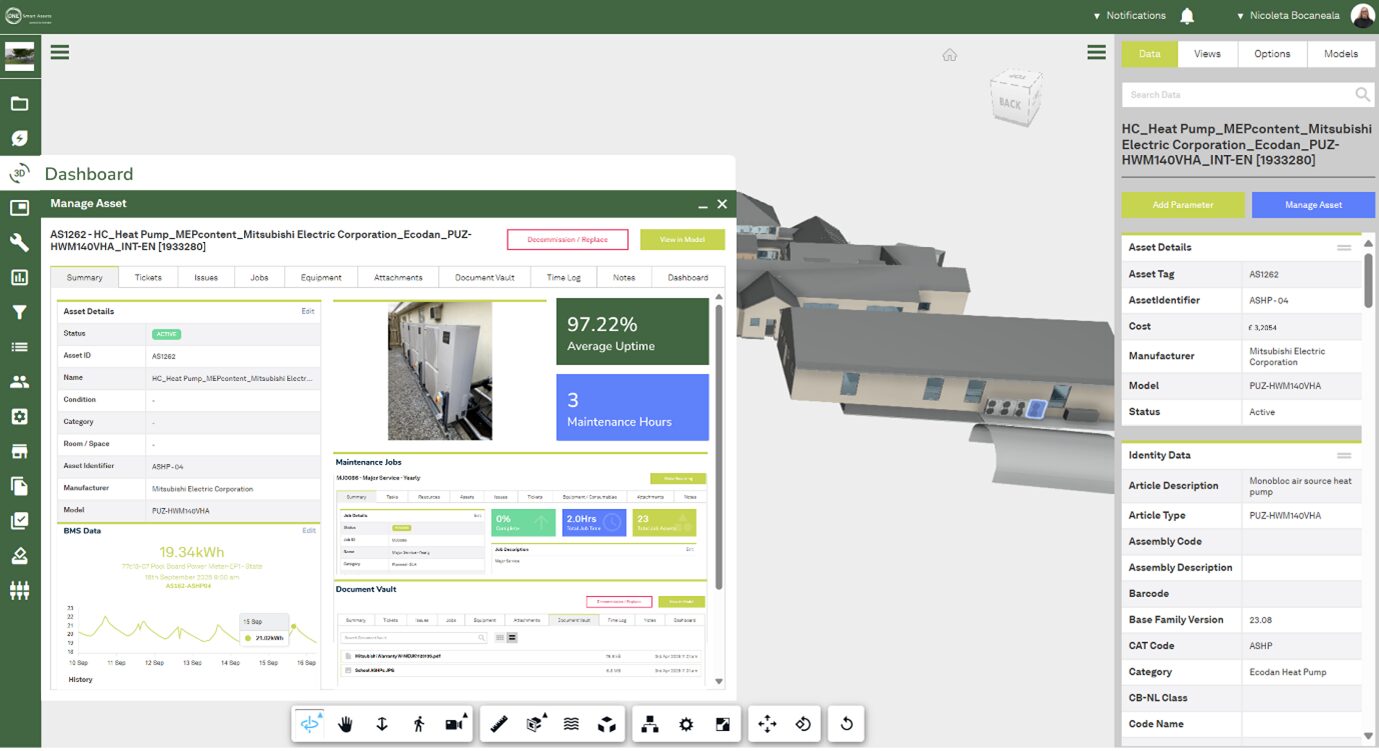
The smart assets team at multidisciplinary consultancy ONE Creative Environments identified that the key to solving these challenges was not simply technology, but a strategic and human-centred approach to digital transformation. By combining digital twin technology with clear information requirements and a co-created delivery model, ONE aimed to redefine how an education trust could manage, maintain and future-proof its estate.
The project began with a pilot across two representative schools, enabling Plymouth CAST to test real-time monitoring, compliance workflows and asset data integration in live conditions. The model proved measurable benefits, from reduced administrative burden to clearer energy insights, and was approved for roll-out across all 35 schools.
ONE integrated new tools with Plymouth CAST’s existing systems, including CAFM, BMS and energy monitoring platforms. This eliminated vendor lock-in, extended system lifespans and future-proofed the solution for evolving technologies.
The project has delivered many quantifiable benefits, among them: reactive maintenance costs were reduced significantly thanks to improved visibility, smarter scheduling and proactive asset management; schools saved a significant number of days of staff time annually, realising trust‑wide savings from reduced paperwork, streamlined contractor coordination and automated compliance workflows; and real‑time monitoring enabled more efficient energy management, allowing data‑driven reductions and early detection of underperforming assets.
Following successful pilots, the approach is now being scaled across all 35 schools. The project is already attracting interest from other multi-academy trusts, local authorities and the Department for Education, which recognises its potential as a replicable blueprint for digital estate transformation across the education sector.
Halve the Half: the no- and low-cost opportunity to reduce cost and carbon | Cardiff Metropolitan University
Government policy on international student fees had pushed Cardiff Metropolitan University into deficit, leading it to seek cost savings.
The university saw an opportunity to reduce its energy use: half of its consumption occurred outside normal weekday hours (7am‑7pm), when most buildings were largely empty.
Although post‑covid occupancy patterns had shifted, the building control systems still operated on pre‑pandemic schedules, inflating both costs and carbon emissions.
The solution, called Halve the Half, turned the university’s existing automated meter reading (AMR) data into a lightweight, vendor‑neutral analytics tool. By importing half‑hourly electricity, gas and water readings into an Excel workbook and separating the data into in‑hours and out‑of‑hours periods, the team quickly identified where energy was being wasted.
Engineers then investigated and applied iterative fixes, adjusting schedules and setpoints, repairing runtime logic and replacing worn parts. Outcomes are recorded by monitors. In addition, by analysing peaks and out-of-hours consumption, replacement plant can be right-sized to meet the measured need, anchoring design conversations in evidence rather than assumption.
Between 1 January and 30 September 2025, half-hourly analytics enabled campus gas consumption to be reduced by 25.7% and water usage by more than 30% year-on-year, without capital works.
For the full academic year to 31 July 2025, gas usage fell 22.3%, electricity 7.5% and water 11.3%, saving 2.3 GWh of energy, 10,000 cu m of water and 430tCO2e. Financial savings from reduced consumption amounted to £700,000 in the year (more than £1m including tariff effects), all within existing maintenance budgets.
This approach didn’t require new sensors or proprietary platforms and can be replicated by any organisation with AMR data.
Celebrate with the best
The winner will be revealed at the gala dinner at the London Marriott Grosvenor Square on 18 March. You can join the shortlisted entrants by booking your seats at the awards. There is an early bird discount for those who book tables by close of play 23 January.
The Digital Construction Awards are organised by Digital Construction Week, the Chartered Institute of Building, CM and Digital Construction Plus. Bluebeam, nima and Sage are among the sponsors.
To find out more about the awards, head to digitalconstructionawards.co.uk.
To become an awards sponsor, email Karolina Orecchini.
Keep up to date with DC+: sign up for the midweek newsletter.